I Never Feel Like a Stranger in Vienna, Austria·
- Hevi Maria
- Apr 19
- 9 min read

Updated: 4 days ago
There are cities you visit. And then there are cities that visit you back — that get under your skin, into your morning rituals, into your dreams. Vienna is the second kind.
From the moment you step off the train or plane, something shifts. The air is different. The pace is different. There's a grandeur here that isn't intimidating — it's welcoming. Imperial arches and baroque facades line streets where people are simply going about their day, buying bread, walking dogs, sipping coffee at a table on the pavement.
I've been to few cities. But Vienna is the one where I never feel like a tourist. I feel like someone who belongs here — who just happens to also carry a passport from somewhere else. The city has that rare part of story: it embraces you completely, stranger or not, without asking for anything in return except your full attention.
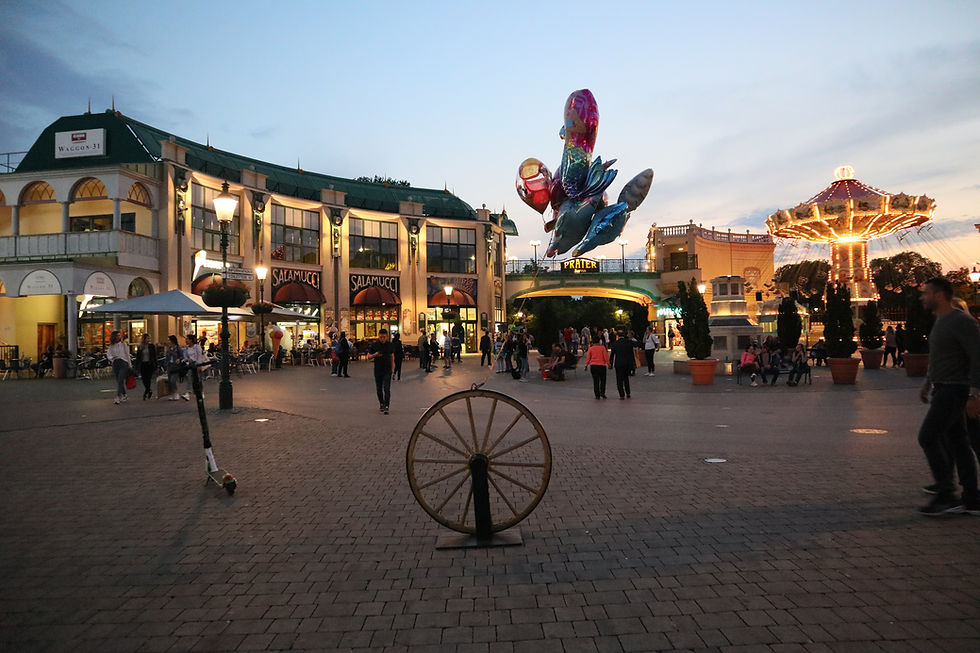
"What I love most about Vienna isn't any one thing. It's the feeling of all things together — the food, the music, the parks, the coffee, the museums — woven into one city that somehow never feels too much."
So let me take you through it. Not the typical guidebook version. My version — the things I actually love, the corners I actually go back to, and everything you need to know to feel at home here too.

Getting Around
The U-Bahn — Your Best Friend in Vienna
Before anything else, let's talk about how easy this city is to navigate. Because once you figure out the U-Bahn, Vienna opens up completely.
Vienna's underground metro — the U-Bahn — is one of the cleanest, most reliable, and most intuitive transit systems I've ever used anywhere in the world. Five lines, colour-coded, and they go almost everywhere you'd want to be. Trains come every 2–5 minutes during the day. It runs 24 hours on weekends. And the signage? So clear even a first-timer can navigate it confidently.

Insider tip: Get the Vienna City Card. The Wien City Card gives you unlimited U-Bahn, tram, and bus travel plus discounts at dozens of museums, palaces, and restaurants. Available for 24h, 48h, or 72h. Grab it at any U-Bahn station or online before you arrive. You will use it constantly — for everything in this list and more.
Trams (Straßenbahn) are also wonderful — especially the iconic Ring tram (line 1 and 2) that loops around the Ringstraße boulevard past all the grand imperial buildings. On your first day, just hop on a tram and ride the whole ring. It's the most beautiful €2.40 city tour you'll ever take.

The Food — Oh, the Food
Viennese Cuisine Is a Love Language
Viennese food is not delicate or fussy. It's hearty, generous, and deeply satisfying — the kind of food that was built for long winters and long conversations.
My non-negotiable list. The things I go back for every single time, without hesitation.


Naschmarkt — Vienna's Most Alive Street Market
If you only go to one market in Vienna, go to the Naschmarkt. Open Monday to Saturday, this open-air market stretches along the Wienzeile for about half a kilometre and sells everything — cheeses from across Austria and beyond, fresh fish, spices, olives, pastries, döner, fresh juice, wine, Liptauer cheese spread, and more. It's loud, fragrant, international, and completely wonderful. Go hungry. Leave very full.
On Saturday mornings, the Naschmarkt extends into a flea market section on the left side — a brilliant place to lose an hour hunting for vintage maps, old records, antique jewellery, and Viennese postcards from another era.
The Ritual I Live For
Coffee in Vienna — A Whole Philosophy
Vienna's coffee culture is UNESCO-listed for a reason. This city didn't invent the café — but it perfected the art of what a café should feel like.

And then on the afternoons when I'm ready for something more — a double espresso, served the Viennese way with a small glass of water on the side, alongside a proper slice of Tiramisu. That combination is one of the quiet luxuries I look forward to the most.
Vienna's café culture is unhurried by design. You are never rushed. You can nurse one coffee for two hours and nobody will look at you sideways. In fact, the waiter will look slightly offended if you eat and run. This is the city that invented the concept of the Kaffeehaus — the coffee house as a place to think, read, write, argue about ideas, and exist.

Café Landtmann
On the Ringstraße at the corner of Löwelstraße 22, in the first district of Innere Stadt. One of Vienna's most storied traditional coffeehouses — Sigmund Freud was a regular. Grand, warm, impeccably old-world. Order a Melange (Vienna's answer to a flat white) and sit in the leather chairs. You'll feel like a Viennese intellectual immediately.
Café Motto am Fluss
Floating on the Danube Canal — yes, literally a café on the water. The views are gorgeous, the interior is beautifully designed, and the morning light off the water is something you want to sit in for a very long time. A perfect spring or summer morning spot. Come early before it fills up.












Stephansplatz & Stephansdom
The cathedral at the heart of Vienna. Its mosaic tiled roof is one of the most recognisable things in central Europe. Stand here on any evening and watch the city move around it — street performers, tourists, businesspeople, locals — and you realise this square is the true pulse of Vienna. Go inside. Climb the tower if you can. Look out over the rooftops.
Hofburg Palace
The Habsburg imperial palace right in the centre of the city. Once the seat of the Austro-Hungarian Empire, it now houses multiple museums including the Imperial Apartments, the Sisi Museum, and the Imperial Silver Collection. You could spend a whole day here and not see everything. Don't try to rush it — let it unfold.
Schönbrunn Palace
Take the U4 to Schönbrunn and walk up through the formal gardens to the Gloriette on the hill. The view of the palace from above, with Vienna spreading out beyond it, is one of those images that doesn't quite fit in a photo. Go in spring when the gardens are blooming. Go in the morning before the crowds arrive. It's magic every time.
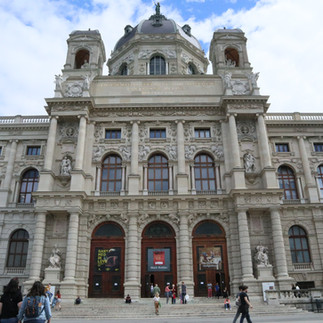
Kunsthistorisches Museum (Museum of Art History)
One of the great art museums of the world — and the building itself is as extraordinary as everything inside it. The main cupola hall alone is worth the entrance fee. Vermeer, Raphael, Caravaggio, Bruegel — all here, and largely without the crushing crowds of comparable museums elsewhere in Europe. You can actually stand in front of a Vermeer and breathe.
Karlsplatz & Karlskirche
The Baroque church of St. Charles is one of Vienna's most stunning architectural moments. The square around it is a hub of city life — the Naschmarkt is nearby, the Wien Museum is here, and in warmer months the outdoor café at the pond in front of the church is one of the best places in the city for an afternoon coffee.

The Prater & Riesenrad
Vienna's great green lung — a massive park that stretches along the Danube, with forest paths, cycling lanes, and the famous old Riesenrad (Giant Ferris Wheel) that has been spinning since 1897. Walk the Hauptallee — the long, chestnut tree-lined promenade — and feel the city melt away. In spring and summer it's absolutely glorious.
The Danube & Donaukanal
Vienna sits between two waterfronts — the main Danube River and the narrower Danube Canal (Donaukanal) that runs through the city centre. The canal banks are lined with beach bars, graffiti art, floating restaurants, and summer pop-ups. On a warm evening, this is where all of young Vienna comes to sit by the water, eat, drink, and talk until late.
Mariahilferstrasse
Vienna's main shopping boulevard — long, pedestrianised, and lined with everything from international chains to local Austrian boutiques. Don't just shop — stop at the cafés along the way, explore the side streets, and discover the quieter neighbourhood of Mariahilf itself. One of the city's most genuinely lived-in neighbourhoods.
Lainzer Tiergarten
Vienna's best kept secret — a vast, ancient wildlife reserve tucked into the hills of the Vienna Woods on the western edge of the city. Once the private imperial hunting ground of the Habsburgs, it's now open to the public and feels like stepping into a completely different world. Wild boar, deer, and mouflons roam freely through the forest. The Hermesvilla — Emperor Franz Joseph's gift to Empress Sisi — sits quietly inside it. No cars, no crowds, no noise. Just forest paths, birdsong, and the kind of deep green silence that makes you forget a city of two million people is just a tram ride away. Come in spring when the woodland floor blooms, or in autumn when the whole forest turns gold. Either way, you'll wonder why nobody told you about this place sooner.
The Season That Changes Everything
Spring in Vienna — The Reason to Come
If I had to tell you one single time of year to visit Vienna, I would say spring without a breath of hesitation. Vienna in spring is something that belongs in a film.

Vienna takes its parks seriously. This is a city where the park is not an afterthought between buildings — it's a destination in its own right. Bring a blanket. Bring your cappuccino. Bring a book. Or bring nothing and just lie in the grass and watch the chestnut blossoms drift down around you.

"A spring morning in Vienna: cappuccino with cream and brown sugar slowly poured over the top, a table outside, a park across the road, blossoms on the chestnut trees. Tell me that isn't one of the best things a human can experience."
For the Curious Mind
Vienna's Museums — You Could Live in Them
Vienna is one of the great museum cities of the world — and what's remarkable is how accessible and un-overwhelming most of them feel.
The MuseumsQuartier (MQ) alone — a complex of former imperial stables converted into one of Europe's largest cultural districts — houses the Leopold Museum, the MUMOK (Museum of Modern Art), and dozens of other institutions. On summer evenings, the enormous courtyard fills with people sitting on the signature purple and grey foam furniture, eating, chatting, watching the world go by. It's a museum quarter that feels like a living room.
Beyond the MQ, there's the Belvedere (home to Klimt's "The Kiss" — which is even more breathtaking in person than in any reproduction), the Natural History Museum (the twin of the Kunsthistorisches across the plaza), the Wien Museum at Karlsplatz, and the Albertina for graphic arts and photography. You could spend a month here and still have more to discover.

A Hidden Gem for Indonesian Souls
When Vienna Serves You a Taste of Home
Here's something most travel blogs won't tell you about Vienna — and it's one of my favourite things about being here as an Indonesian traveller.
Toko Sederhana — Indonesian Grocery Store, Vienna Tucked into the city, Toko Sederhana is an Indonesian grocery store offering authentic Indonesian products — from your favourite sambal and instant noodles to tempe, kecap manis, and snacks you thought you'd have to fly home for. Walking in and finding these shelves is a genuinely emotional experience when you've been away for a while. It's proof that Vienna, for all its imperial grandeur, also quietly makes room for everyone's home.
There's something beautiful about the fact that in one of Europe's most classically European cities, you can also find a little corner of Indonesia. Vienna has always been a city of migrants, travellers, musicians, artists, and wanderers from everywhere. That's part of what makes it feel so welcoming to people from every corner of the world — including ours.
Why I Keep Coming Back
Vienna Doesn't Just Welcome You — It Keeps You
I've tried to explain the feeling of Vienna to people who haven't been, and it's always a bit inadequate. Because it's not really about the palaces, or the museums, or the coffee.
It's about the way you feel inside all of it. The way the city's rhythm — unhurried, cultured, deeply alive — gets into your bloodstream and changes your pace. You walk differently here. You sit differently. You look up more. You linger longer. You eat slower. You let yourself be moved by a Klimt painting for a few extra minutes because nobody is rushing you out.
I love Vienna for its bratwurst at midnight and its tiramisu in marble cafés. For its chestnut blossoms in April and its museum halls in winter. For the U-Bahn that takes me anywhere I want to go in minutes and the parks that give me somewhere to go when I want to stay exactly where I am. For Café Landtmann and Café Motto am Fluss, and for the unnamed bench near the Karlskirche pond where I've sat and thought about everything and nothing.
And yes — for that one grocery store that carries Indonesian products in the middle of Austria, just to remind me that home is never as far away as I think.
"Vienna is the city where I am most myself — not because I was born here, but because something here saw me clearly from the very first day and said: yes. You belong. Come in."
So whenever you go — whether it's your first time or your fifth — take the U-Bahn. Find a Würstelstand. Order the Goulash. Pour the brown sugar over your cappuccino cream slowly. Sit in the Volksgarten when the roses are out. Walk through the Kunsthistorisches when the afternoon light falls across the paintings just right.
Let Vienna find you. It will. It always does.


Comments